01 / CONTEXT
Aban Foundation is a Swedish foundation that owns a portfolio of for-profit operating companies. Prospective member and investor interest was handled through a Google Form, a sparse website and personal introductions.
The process depended heavily on the founder, did not scale well and did not provide the product experience or proof needed for a curated membership and investment model.
02 / THE PROBLEM
What needed to change
The core challenge was not simply adding a transaction flow. It was creating enough trust and signal for a prospective member to understand the model, follow the portfolio and decide whether to commit — without creating an unmanageable operational burden for a very small team.
03 / MY CONTRIBUTION
How I approached it
- Researched impact-investing and adjacent platform models, interviewed three potential target users, then translated the findings into positioning, journeys, design archetypes and a phased go-to-market plan.
- Defined the product model, pricing architecture and scope, and wrote a detailed PRD covering information architecture, permissions, state machines, data model, application and planned payment flows, admin operations, communications, analytics, GDPR and the release plan.
- Designed prototypes for the member journey, applications, invitations, administration and scope decisions, followed by a high-fidelity 2027–28 vision prototype for investor conversations and roadmap planning.
- Built the live MVP — V1 of the member platform and admin panel — with Next.js, TypeScript, Supabase, Postgres, Drizzle, Resend, Vercel and Claude Code, feeding implementation findings back into the product specification.
04 / KEY DECISIONS
The choices that shaped the work
Make trust the product problem
The platform was framed as a trust-making tool rather than a transaction tool, so proof, clarity and controlled access shaped the experience.
Build a native product surface
A dedicated Aban Hub could express the model and brand more coherently than assembling generic community, fundraising and portal tools.
Use a phased application model
The first phase supports warm invitations, while the next phase opens public applications without changing the underlying membership model.
Keep the operating surface small
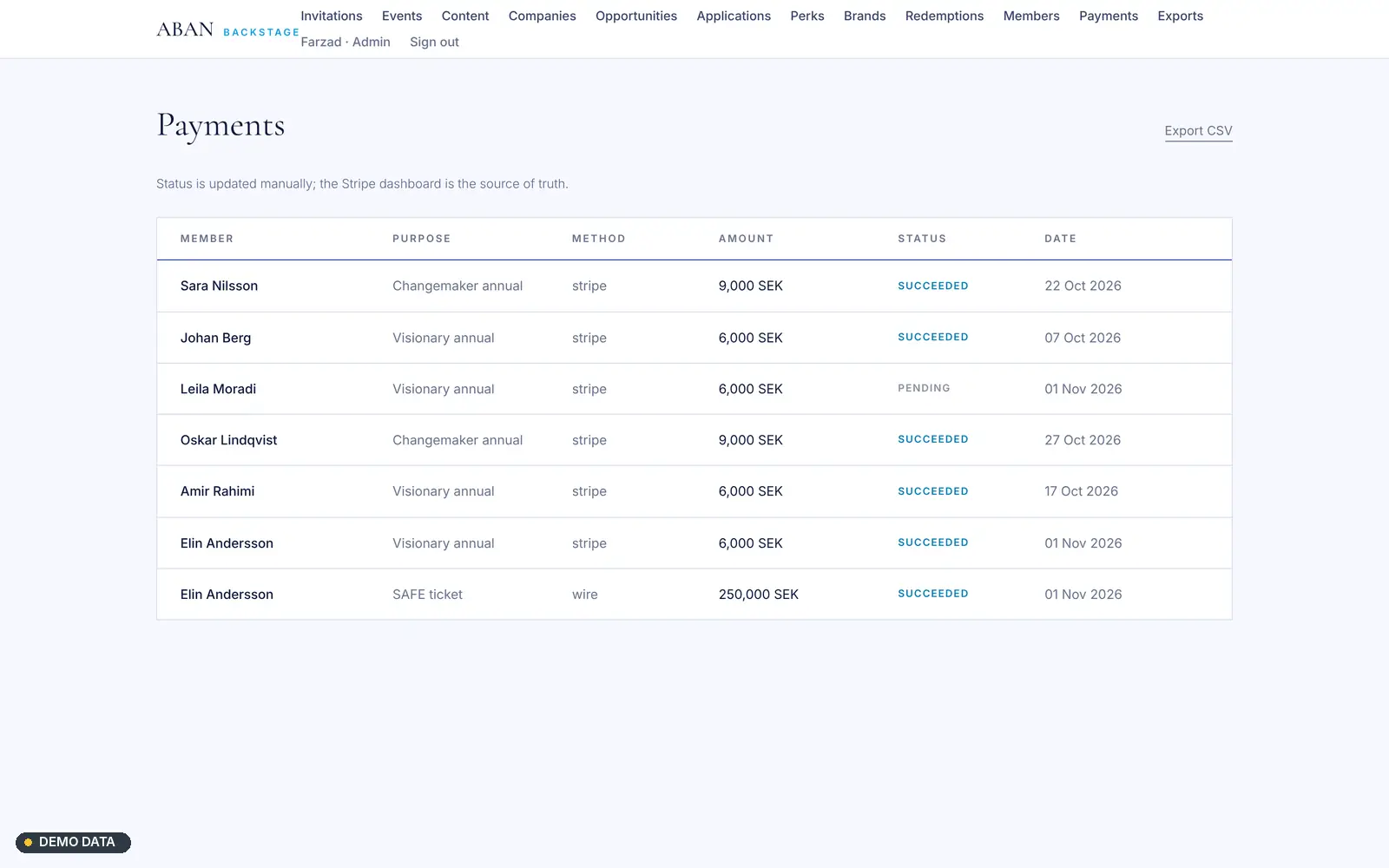
Managed authentication, private file storage and a focused admin flow kept V1 manageable. The admin panel supports manual payment-status updates; payment links stayed on the roadmap.
05 / WHAT SHIPPED
The live V1, in five screens
Screens from the live member platform and admin panel, shown with demo data for illustration. Pick a stop, or open any screen at full length.
DEMO DATA — FOR ILLUSTRATION ONLY. MEMBERS, COMPANIES AND FIGURES ARE NOT REAL.
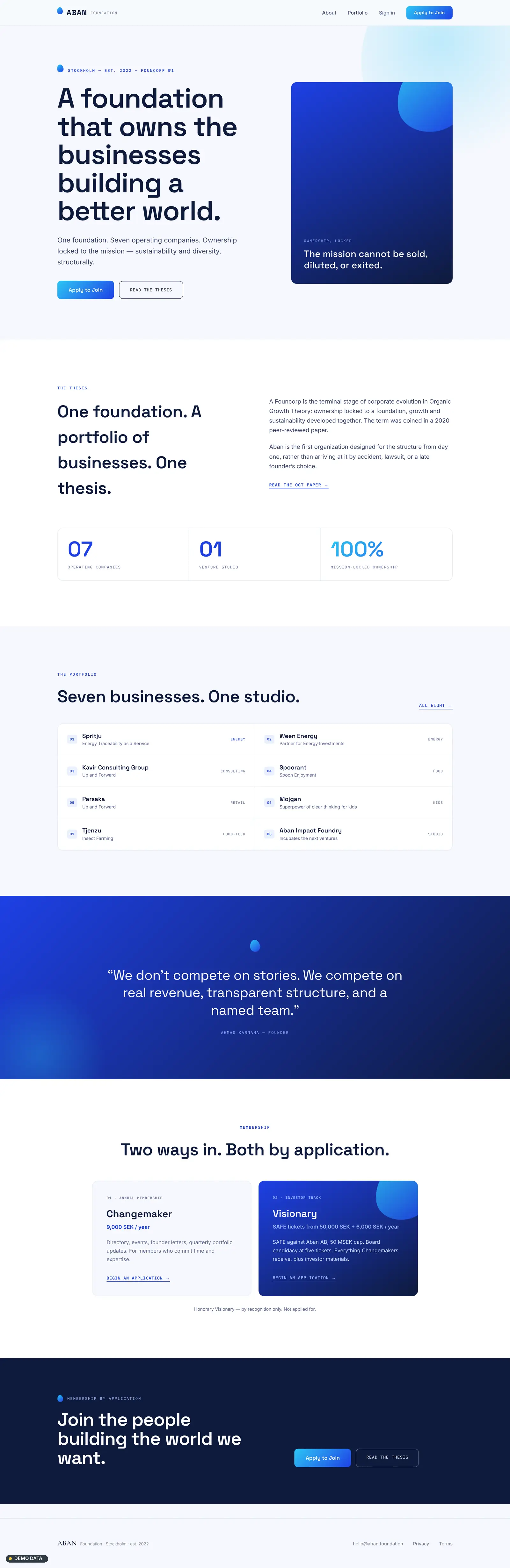
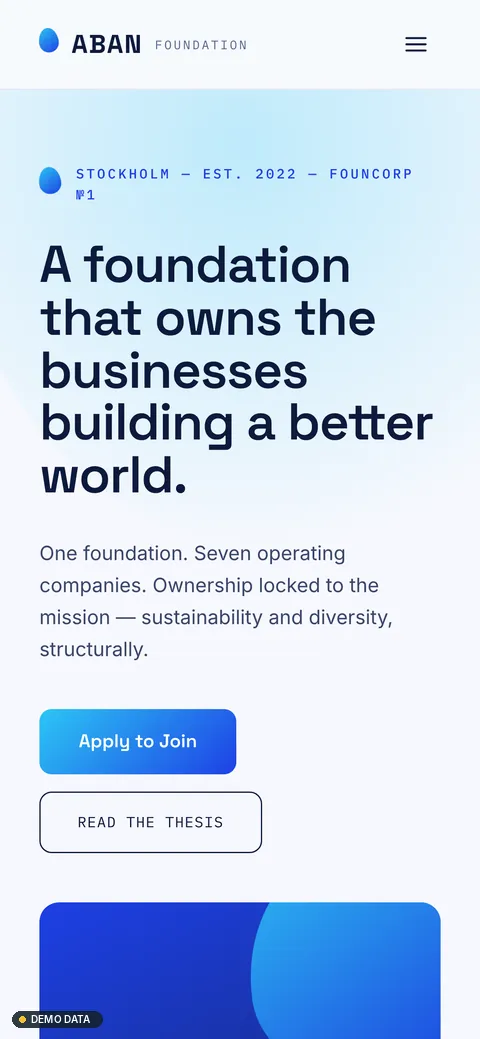
An invitation-only front door
The public site explains the model. Membership starts with a personal invitation; public applications are planned for a later phase.
Decision 03 · Use a phased application model ↑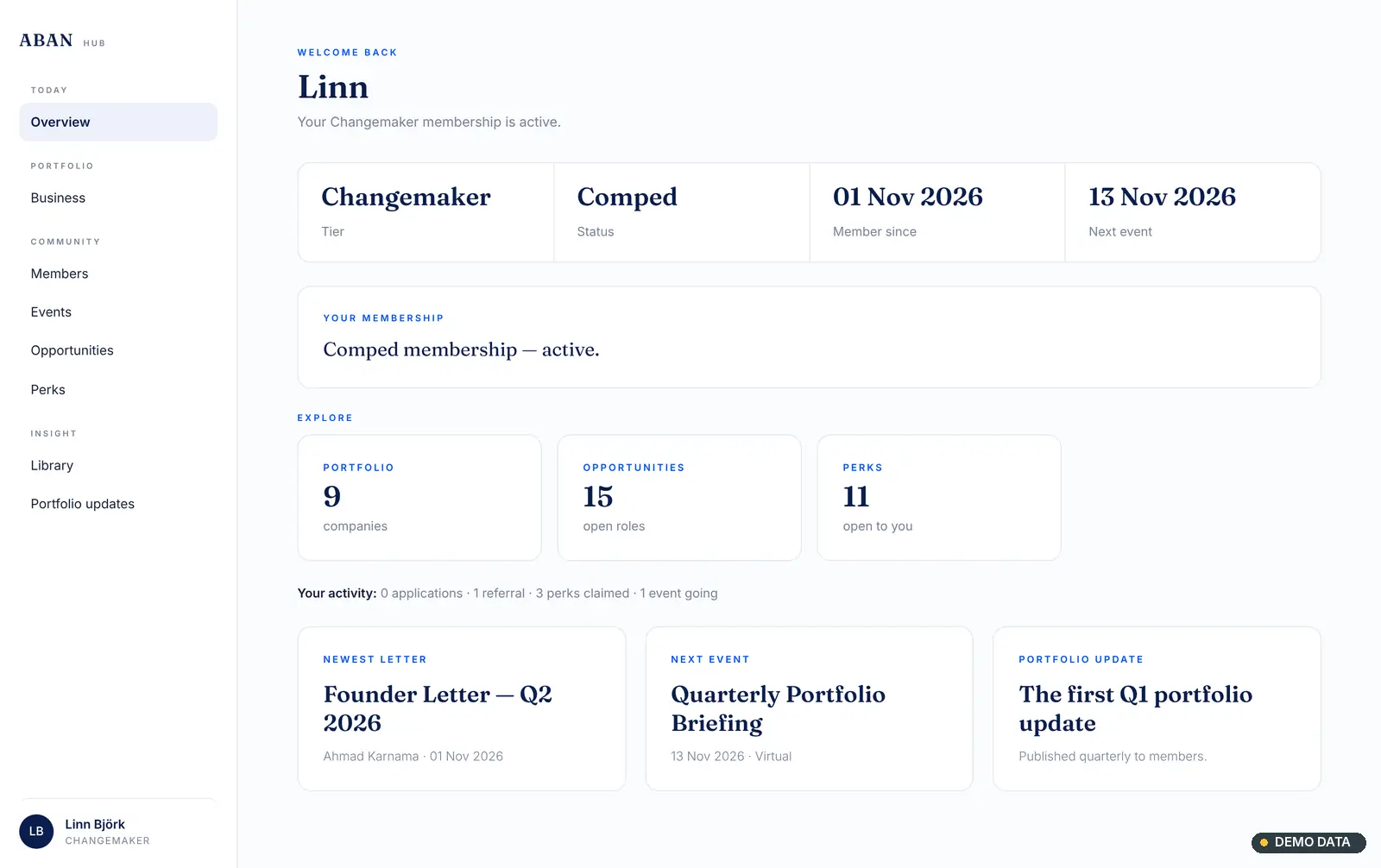
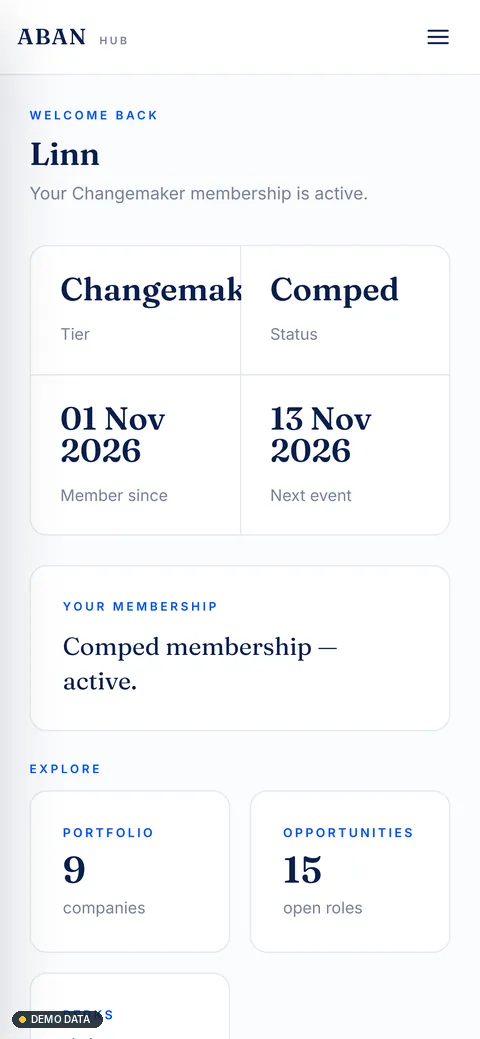
One home for the membership
Tier, status and membership, plus what’s new across the portfolio, open roles, perks, letters and events — on one screen.
Decision 02 · Build a native product surface ↑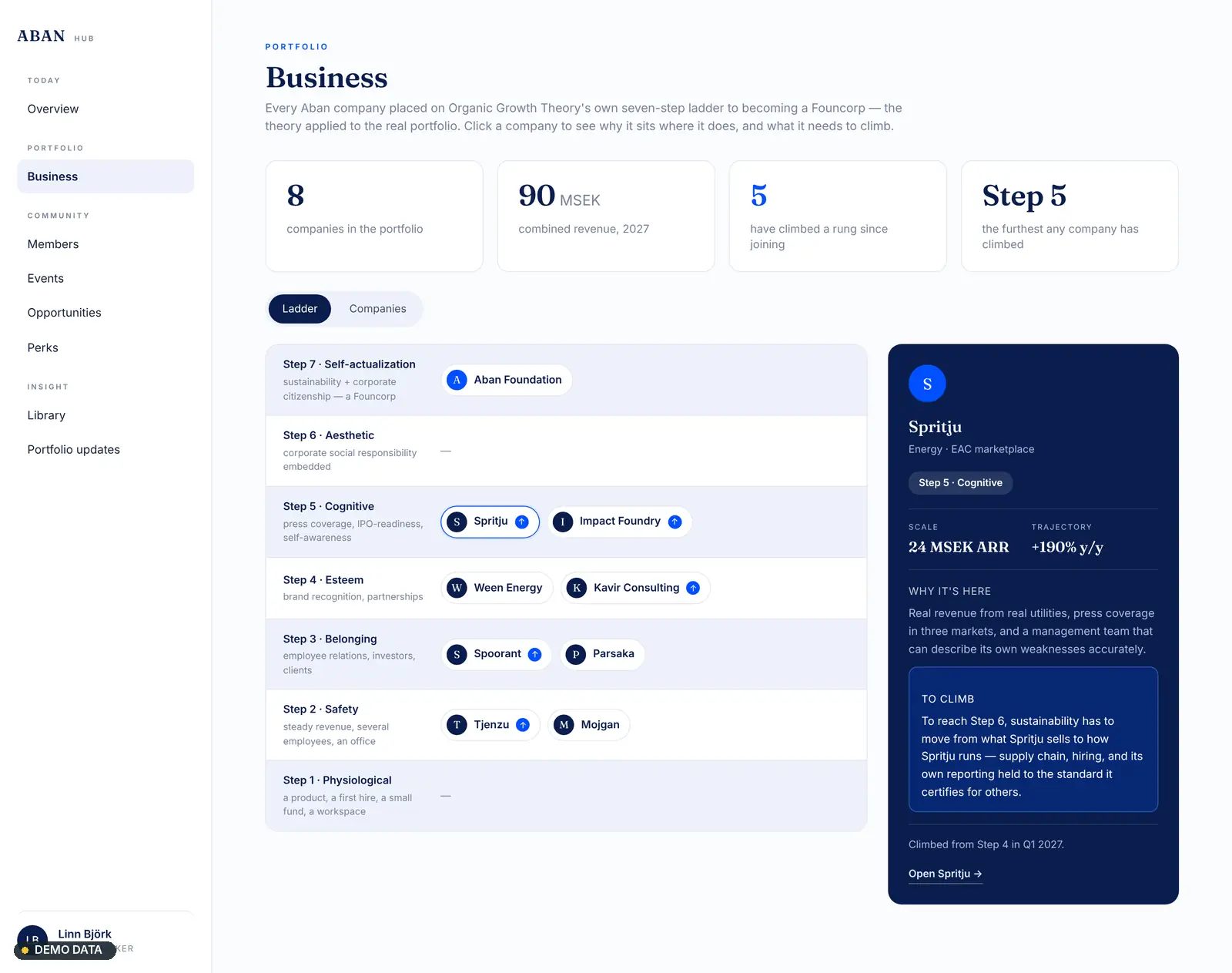
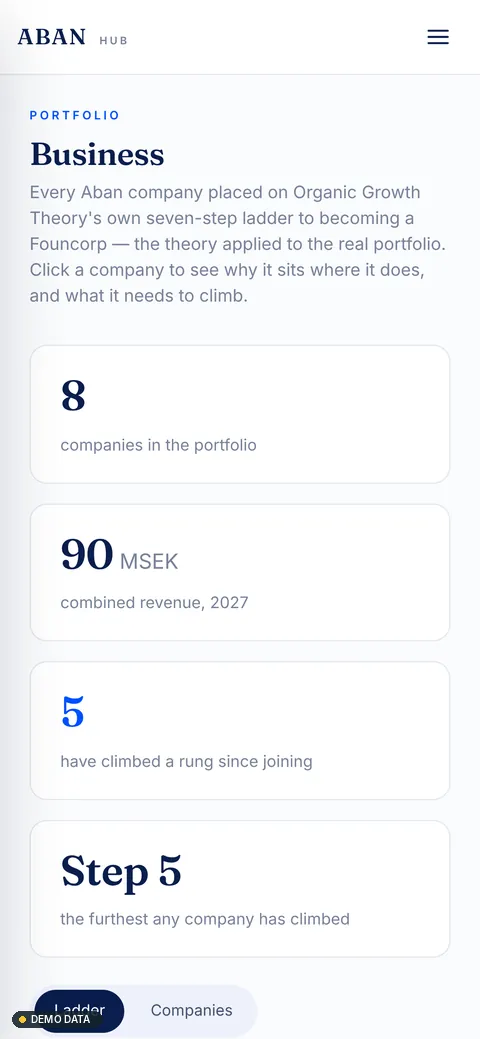
The portfolio, made legible
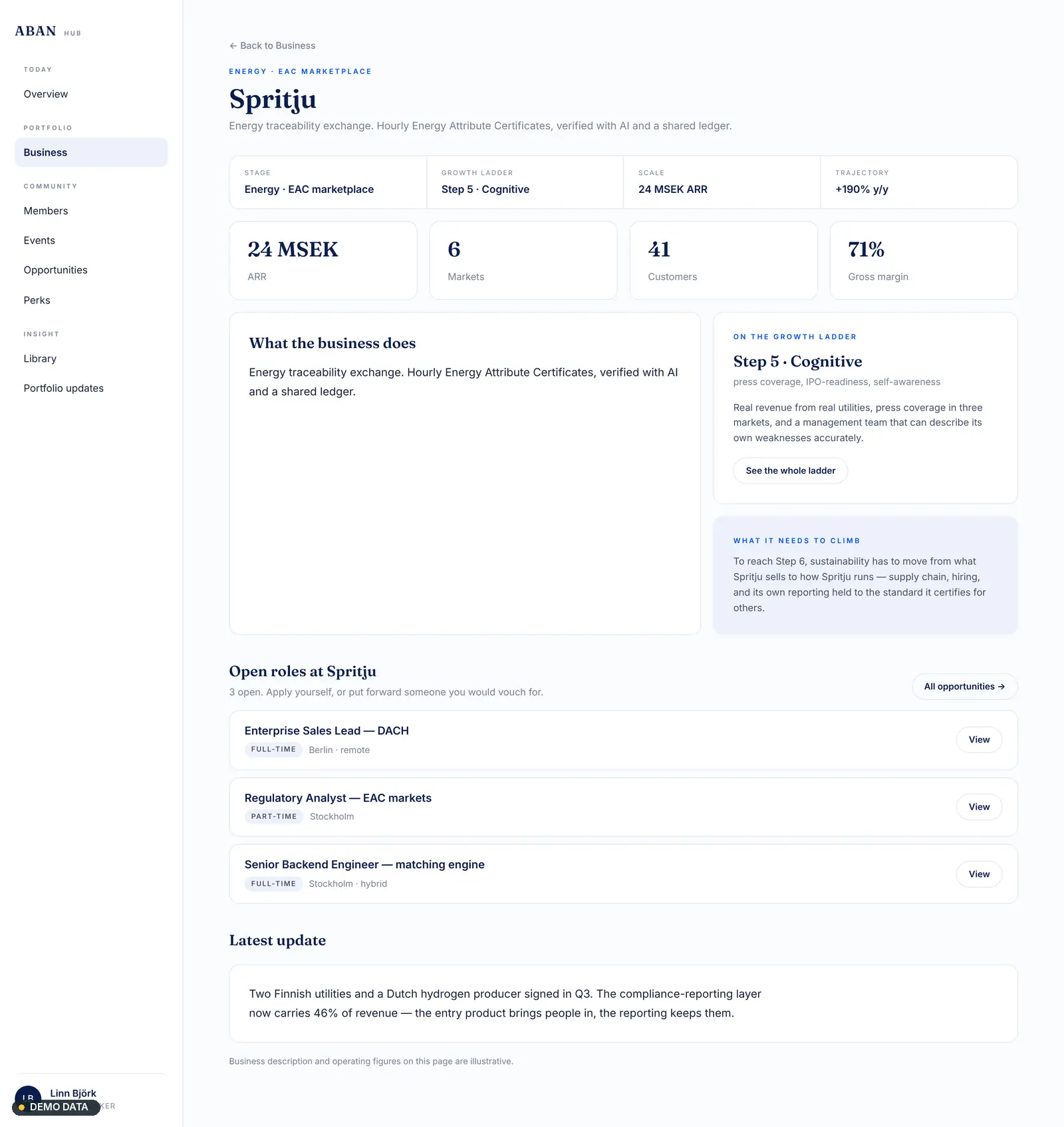
Every company placed on a seven-step growth ladder, with why it sits where it does and what it needs to climb.
Decision 01 · Make trust the product problem ↑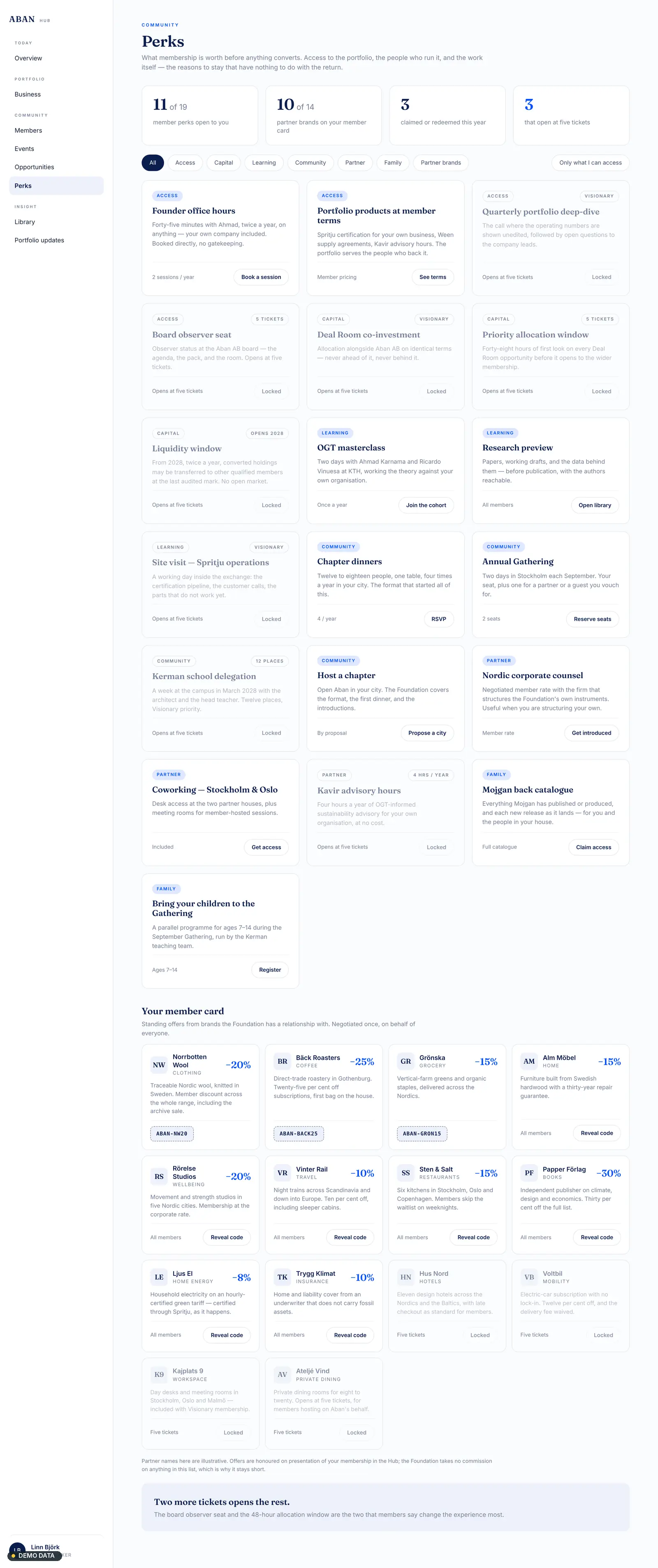
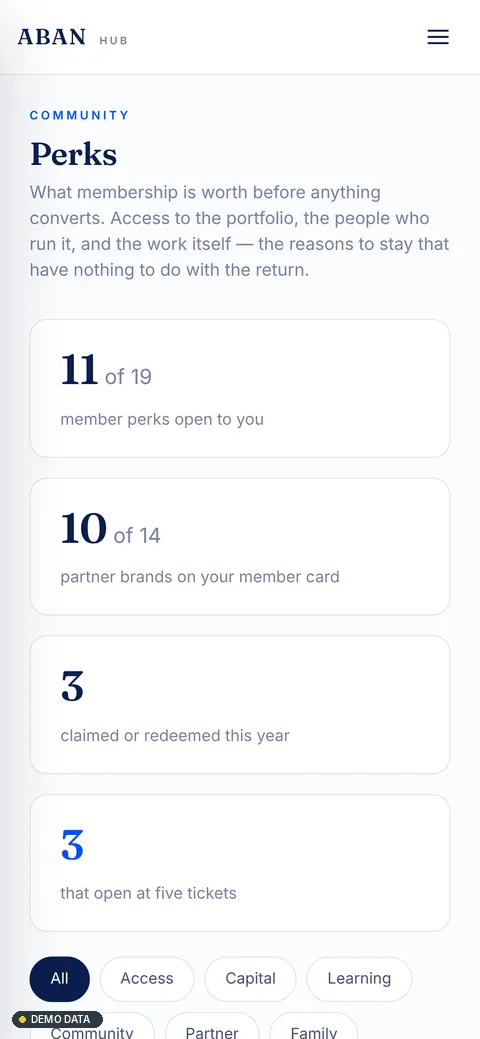
Access that grows with commitment
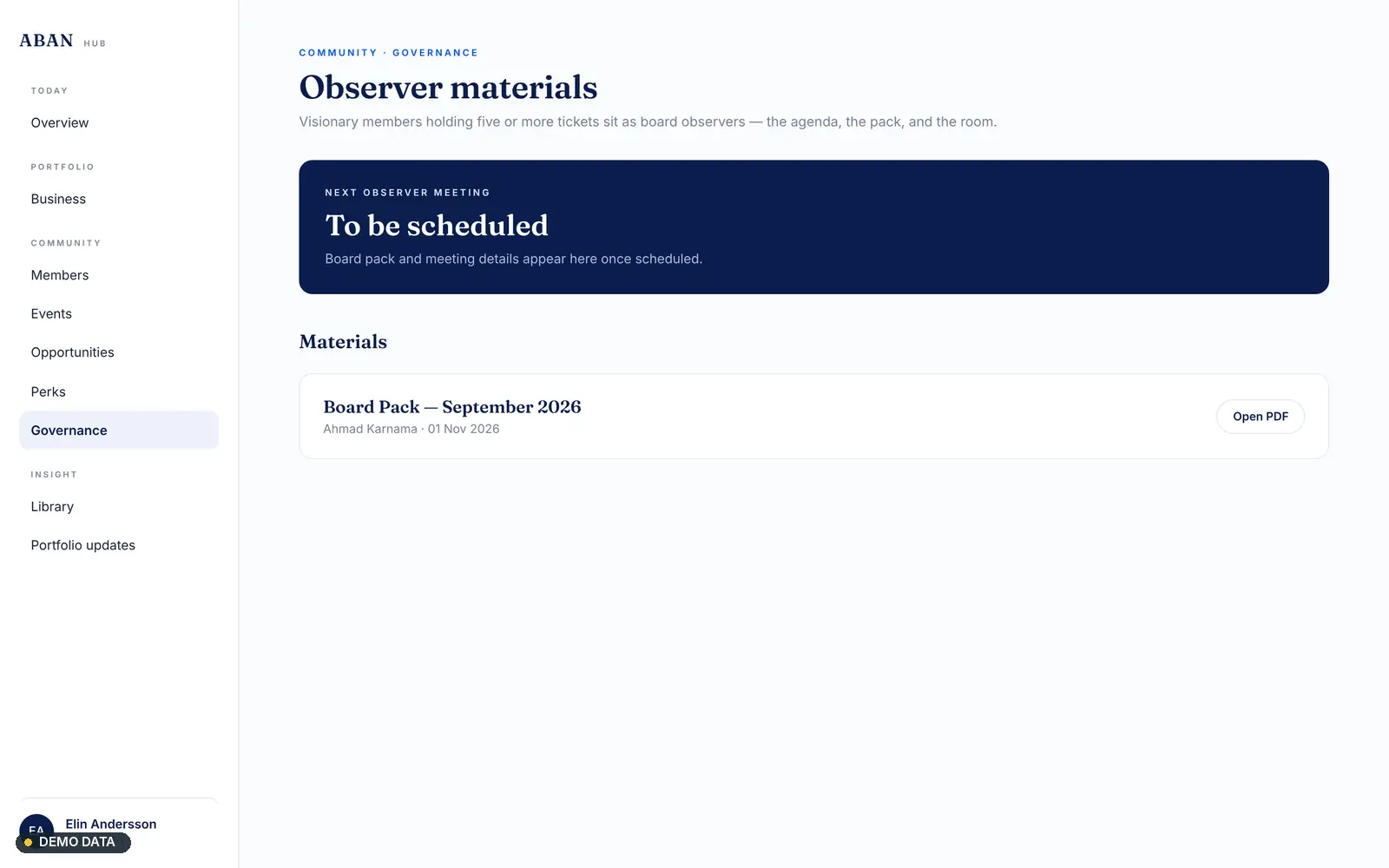
Perks and areas open by tier; some unlock at five SAFE tickets, when a Visionary member becomes a board candidate.
Decision 01 · Make trust the product problem ↑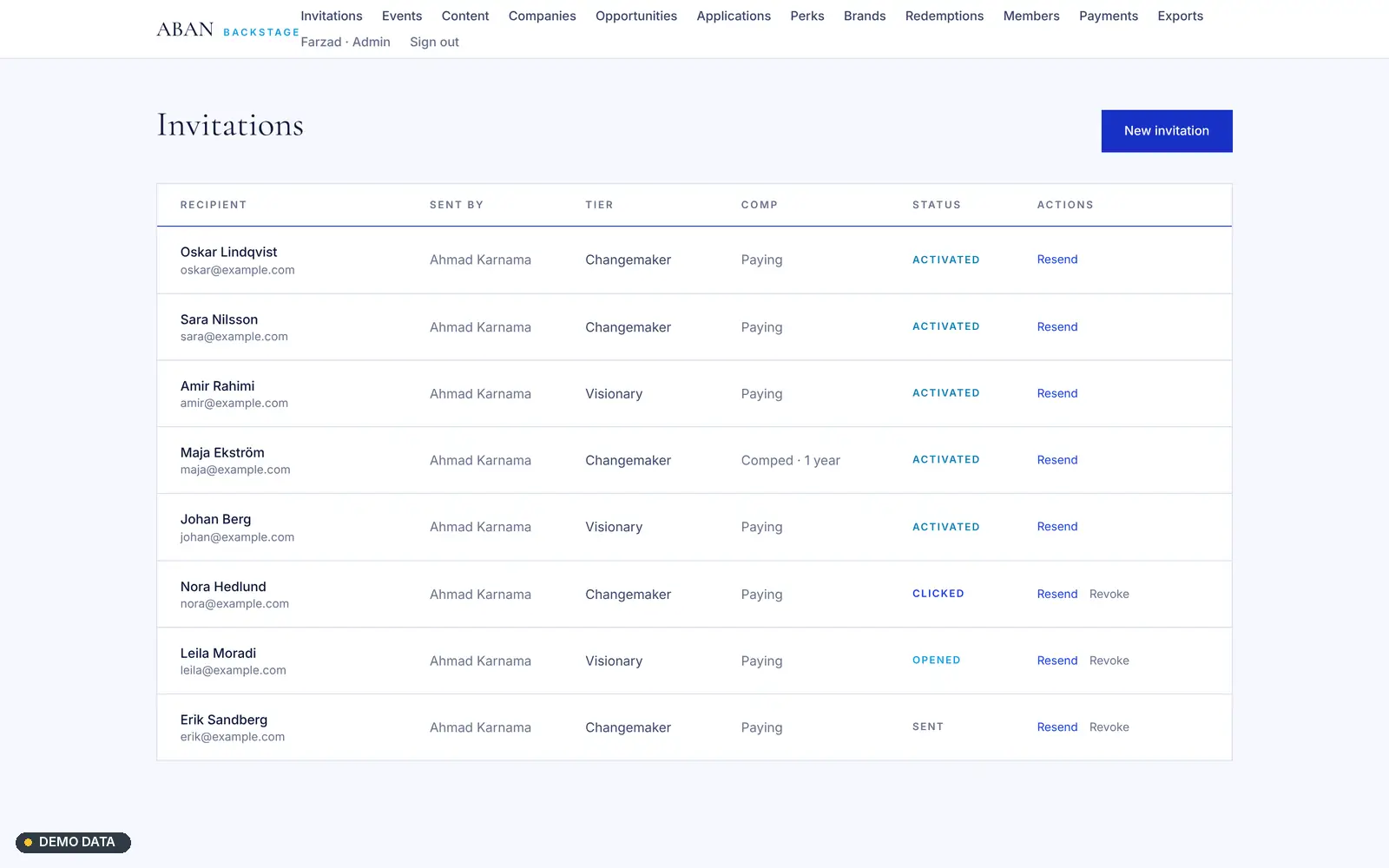
A deliberately small admin surface
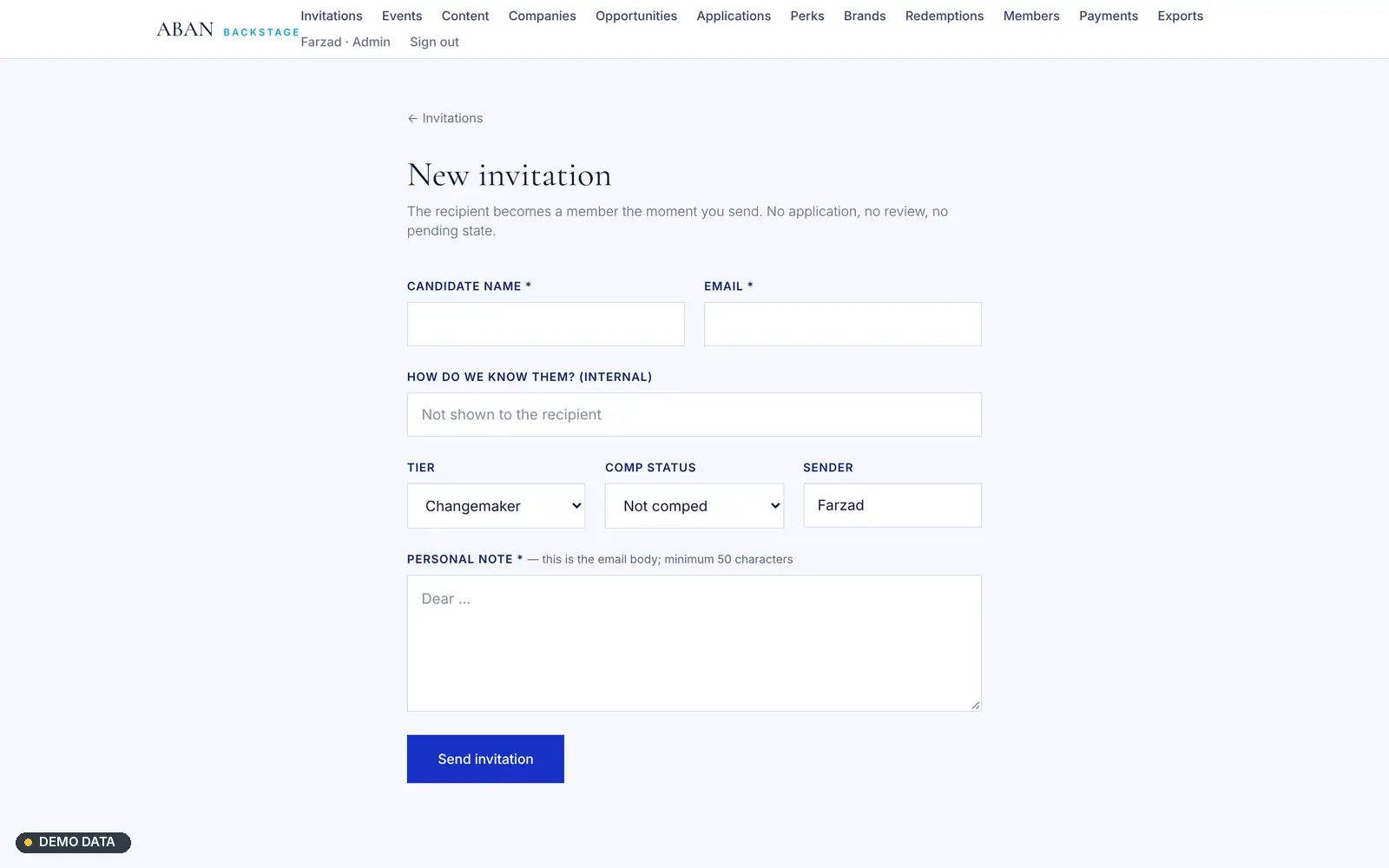
Admins send personal invitations and follow each one from sent to activated. Payment status is updated manually, with Stripe as the source of truth.
Decision 04 · Keep the operating surface small ↑More screens
TAP TO OPEN · 12 SCREENS IN TOTAL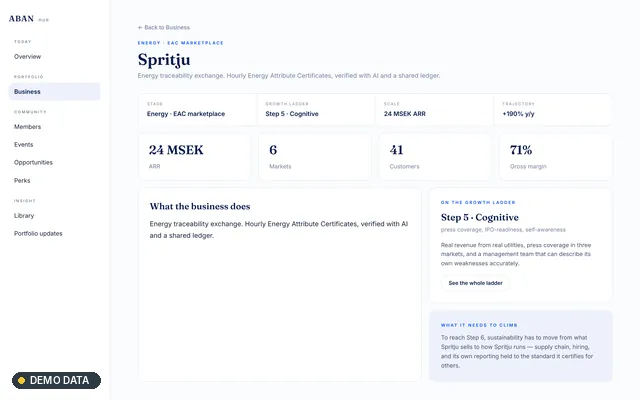 Company page — metrics, what the business does and what it needs to climb.
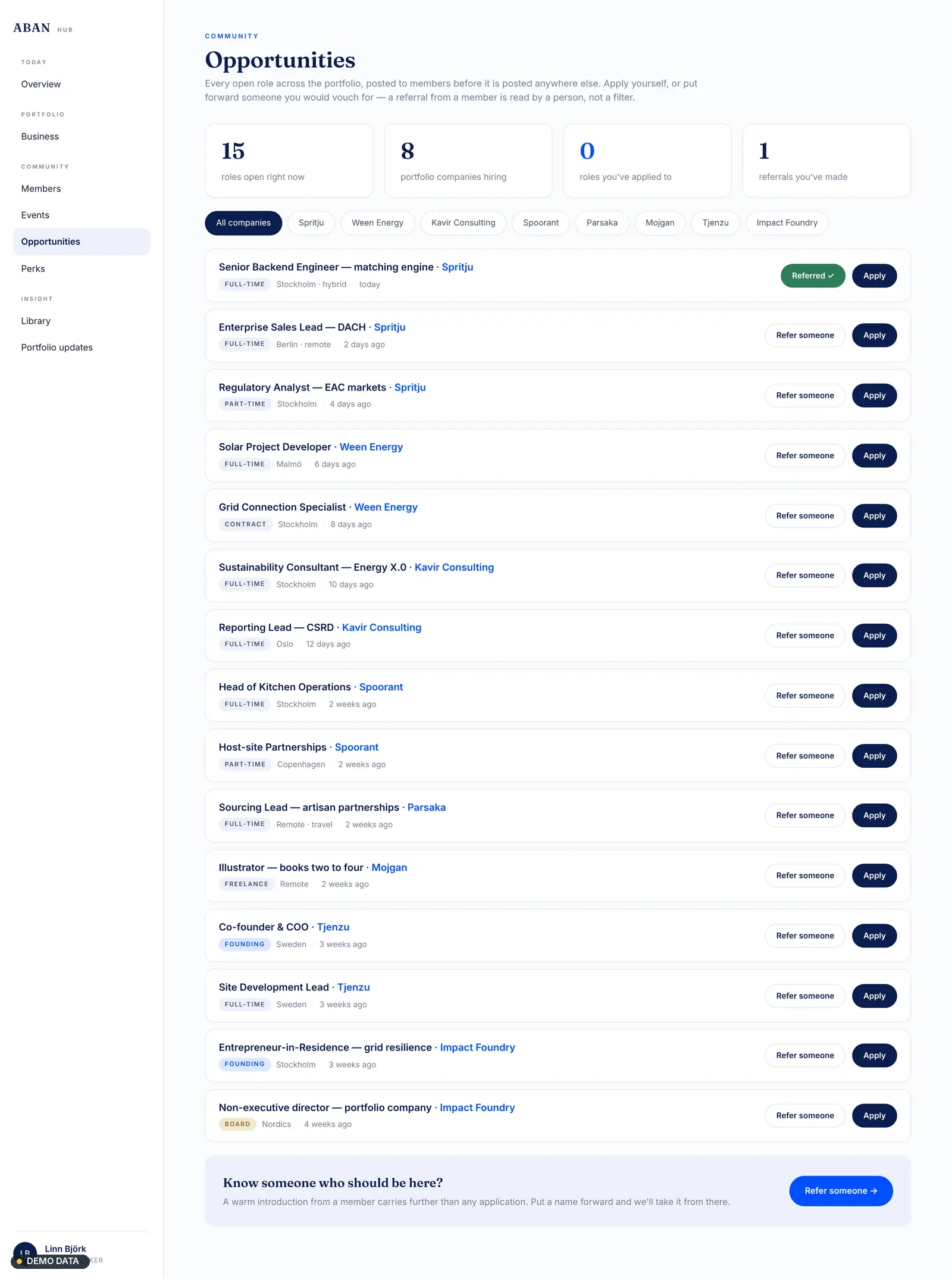
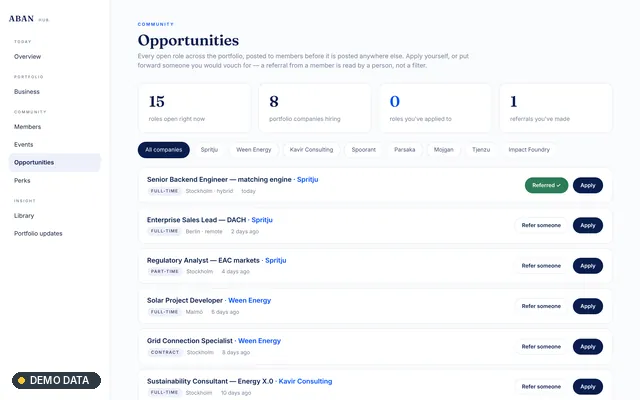 Opportunities — open roles across the portfolio, shown to members first, with apply and refer.
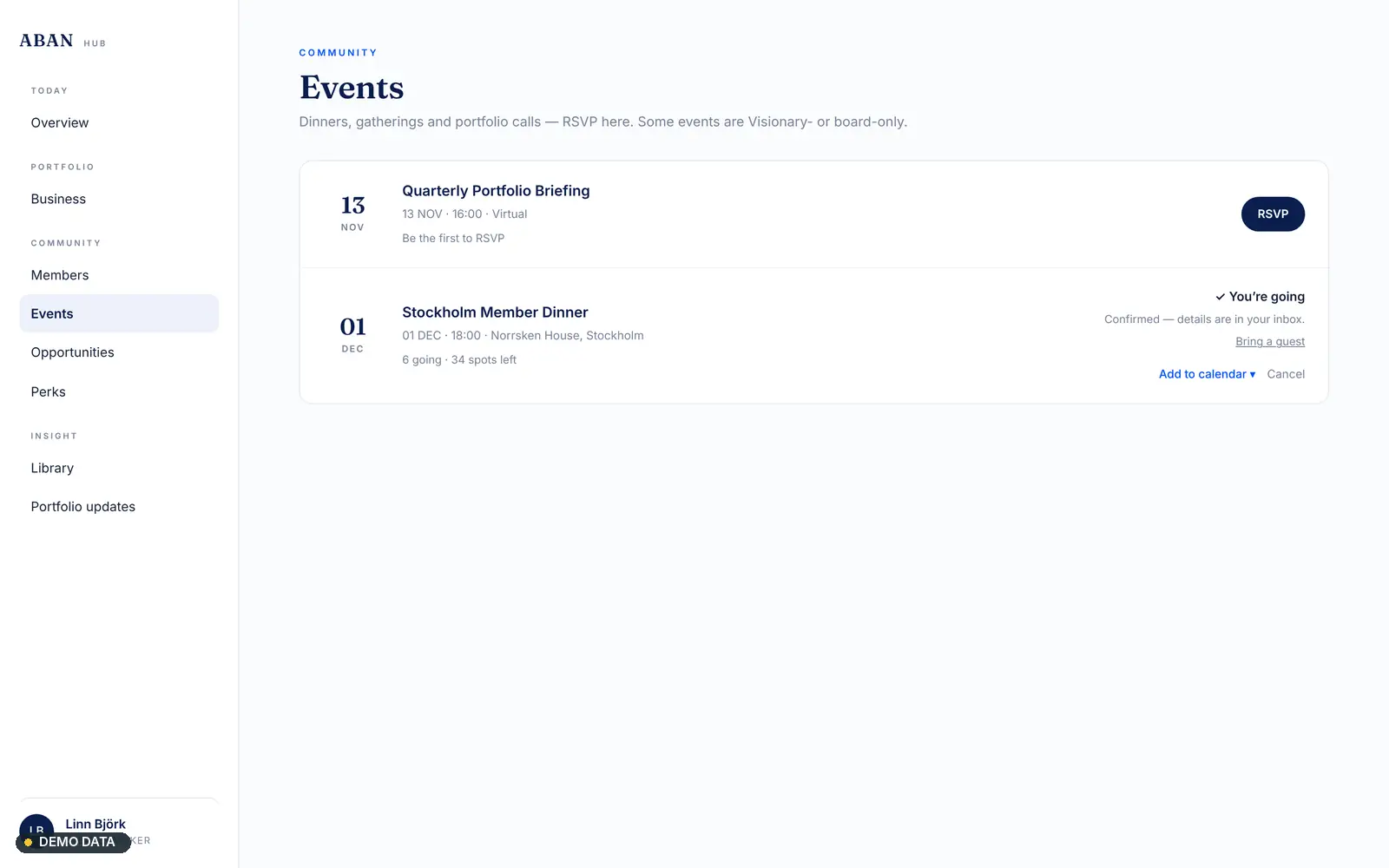
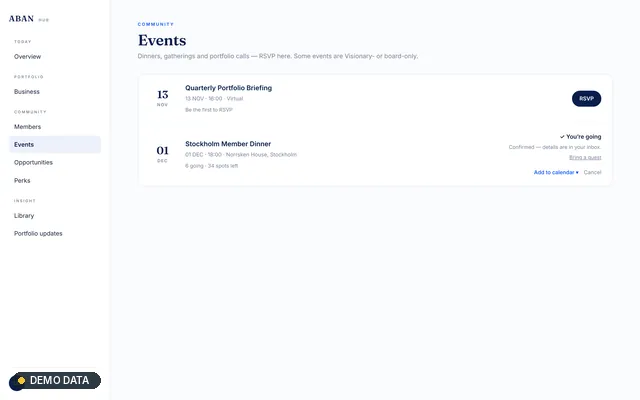 Events — RSVP, with some events for Visionary members or the board only.
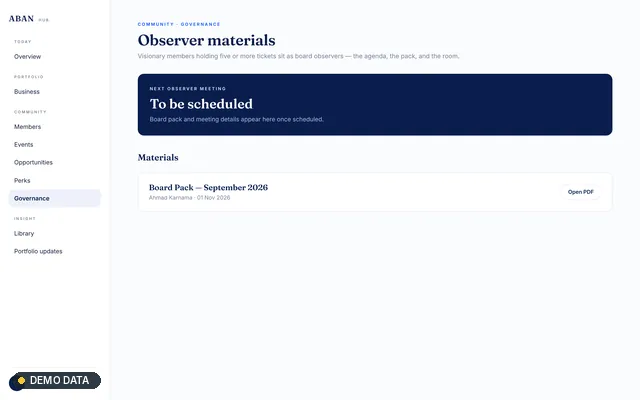 Board-candidate area — observer meetings and board packs for Visionary members.
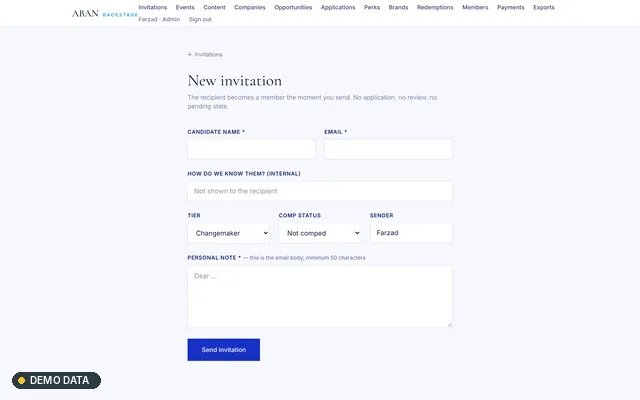 Admin — a personal invitation; the recipient becomes a member when it is sent.
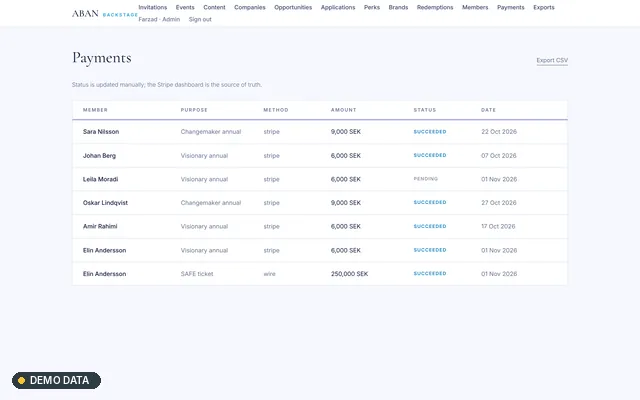 Admin — payments, updated manually with Stripe as the source of truth.
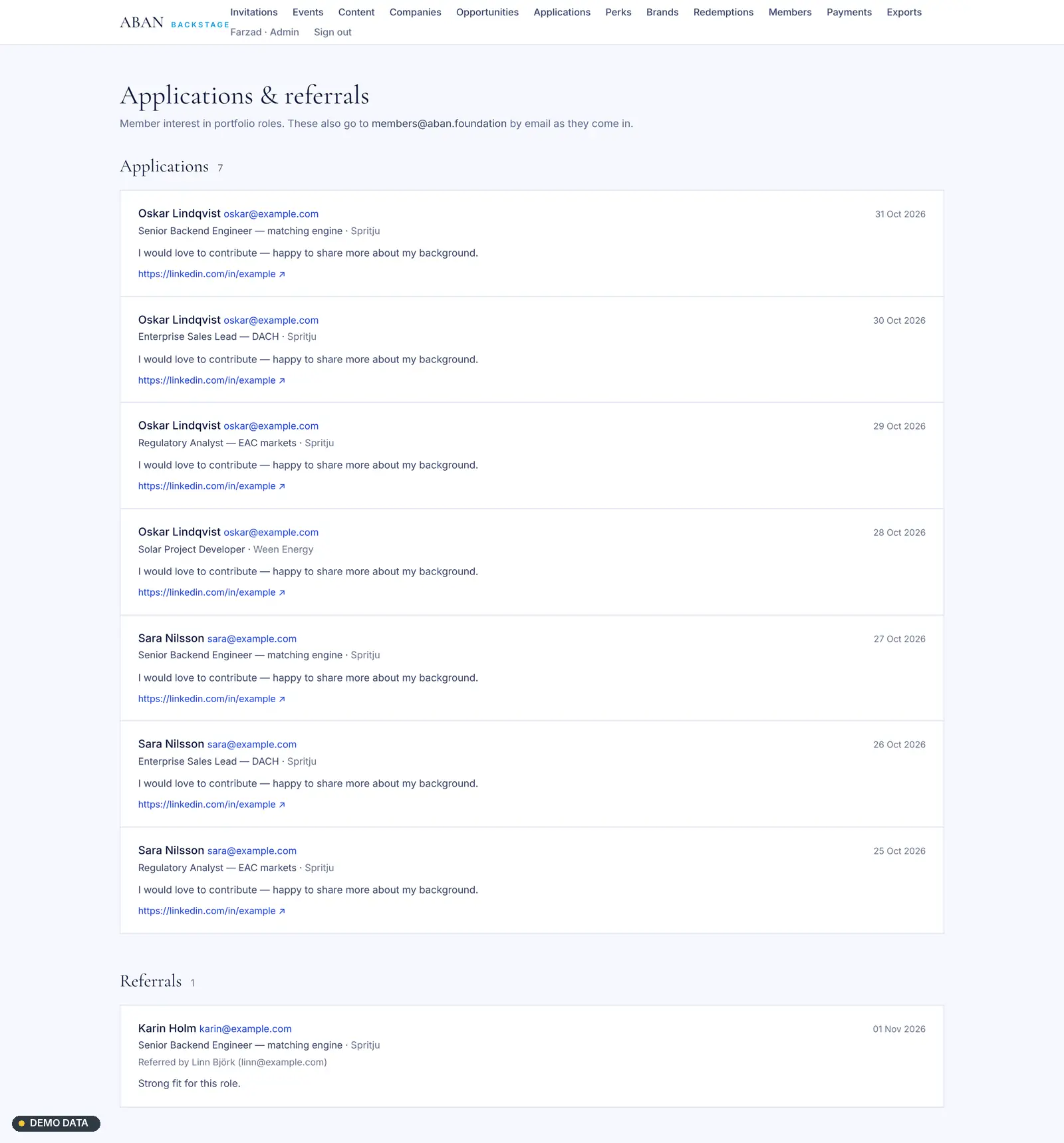
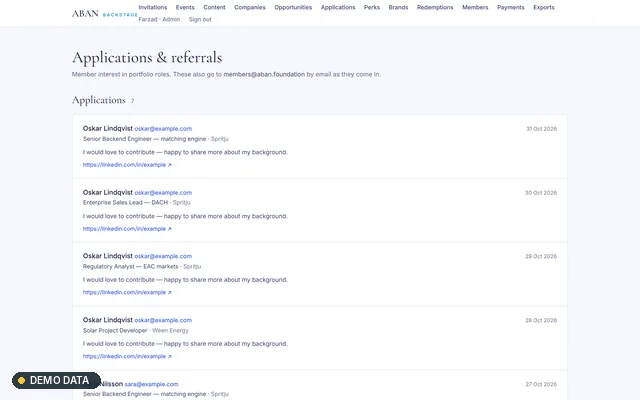 Admin — applications and referrals for portfolio roles.
06 / HOW I BUILT IT
Built with Claude Code
I built V1 by directing Claude Code as an engineering partner, with the PRD as the contract between us. The agent wrote most of the code; the product decisions, scope and review stayed with me.
- The PRD was the source of truth. A detailed PRD set what to build, and a short rules file (
CLAUDE.md) told the agent how: the fixed stack, EU-only data, GDPR limits, and what was explicitly out of scope. Every build decision traced back to a PRD section. - Bounded slices, not big drops. Work moved in small, working increments, one feature at a time, each reviewed before the next began. That kept the whole build reviewable by one person.
- The build fed back into the spec. When implementation exposed a gap, it was logged rather than quietly patched. Each deliberate deviation was recorded as PRD says → we built → why → how to reconcile. New Hub surfaces entered the PRD only after owner approval.
- Trust enforced in code, not just in copy. Access rules run on the server, never in the browser. Admin actions are safe against double clicks, so no duplicate sign-in links. Releases move from preview to staging to production, and staging is kept out of search engines.
What this showed me: AI makes building fast; deciding what to build is still the work. A clear spec, explicit constraints and small reviewable steps turned an AI agent into a reliable delivery partner.
07 / OUTCOME & SCOPE
What changed — and what the result means
The result was a live V1 of the member platform and admin panel, connecting application and membership flows, portfolio content, events, manual payment-status tracking and the admin work behind invitations and reviews.
A versioned PRD and build-time feedback loop kept product decisions, technical implementation and operational rules aligned as the product moved from concept to working software.
The 2027–28 vision prototype made the longer-term value proposition concrete for investor conversations and now provides an input to roadmap prioritization.
WHAT THIS REINFORCEDIn a 0→1 product, strategy, experience, technical scope and go-to-market are one system. Progress comes from making the core risk explicit and keeping every simplification deliberate and reversible.